
Walk into a building framed by WholeTrees Structures and you notice the columns first. They are not squared, laminated, or wrapped in drywall. They are trees: peeled, sanded, and still branching where they branched in the forest. Maybe you even notice you breathe more deeply while in the presence of this reminder of our natural world.
For Co-founder and Chief Executive Officer (CEO) Amelia Baxter, that is the point. Since 2007, her company has connected communities and forests through their products while making the case that the strongest, lowest-carbon structural material available may be the one that needs the least processing, molded by millions of years of evolution.
Growing up at the edge of a state forest in Connecticut, the trees were my constant companions. From an early age, I sought out activities that put me outside and in relationship with nature, and as I grew up, I knew I wanted to work at the intersection of land and people.
I met my co-founder, Roald Gundersen, in 2004. He was an architect deeply committed to trees and to the power of building with a material that is renewable, aesthetically enticing, and whose strength and form have been refined over millions of years. Coming from a family of architects and a childhood in the forest, I immediately saw the connection and knew I could scale this concept for the benefit of design and the environment.
The Flexible Capital Fund (Flex Fund) is proud to welcome WholeTrees to our portfolio with a $500,000 revenue-based financing loan supporting the company's expansion into New England.
Wisdom from Nature
Conventional construction treats a tree as raw material to be reconstituted in shape and form. Milling a log into square lumber slices through the outer fibers that give a tree much of its strength, and it leaves a large share of the wood on the mill floor. But for all the innovations in our construction industry, perhaps the most durable and impactful is to recenter natural design.
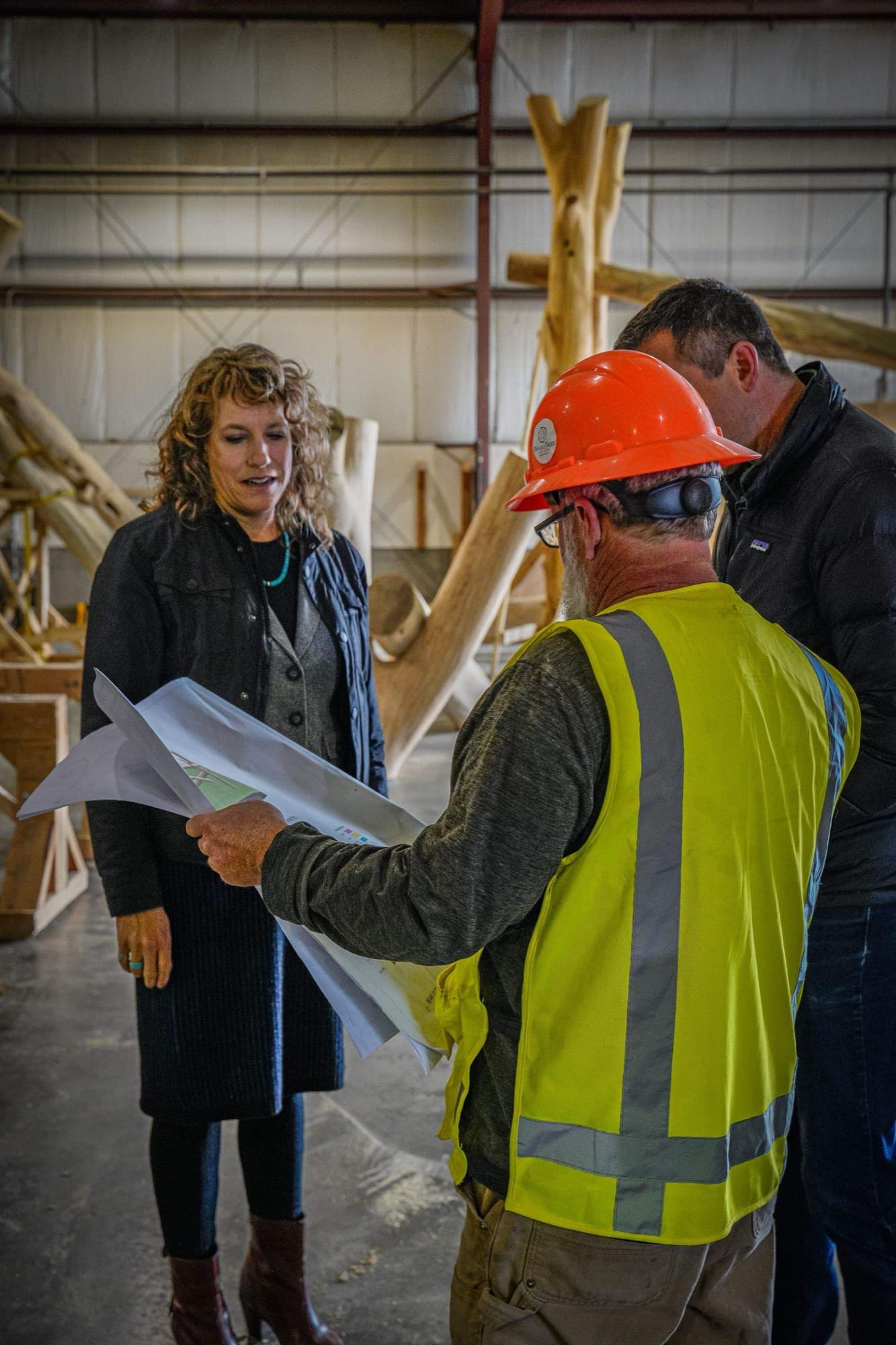
WholeTrees leans on millions of years of organic structural engineering by working with Structural Round Timber (SRT), which keeps the tree whole. The company's team designs, engineers, grades, and fabricates columns, beams, trusses, and full structural assemblies that take the place of steel, concrete, and laminated wood products in commercial buildings. Their cutting-edge technology and inventory platform scans and catalogs actual trees to be seamlessly integrated into architectural drawings. Then each piece ships with pre-fit steel connections and stamped engineering drawings, so a contractor can install it like any other structural system.
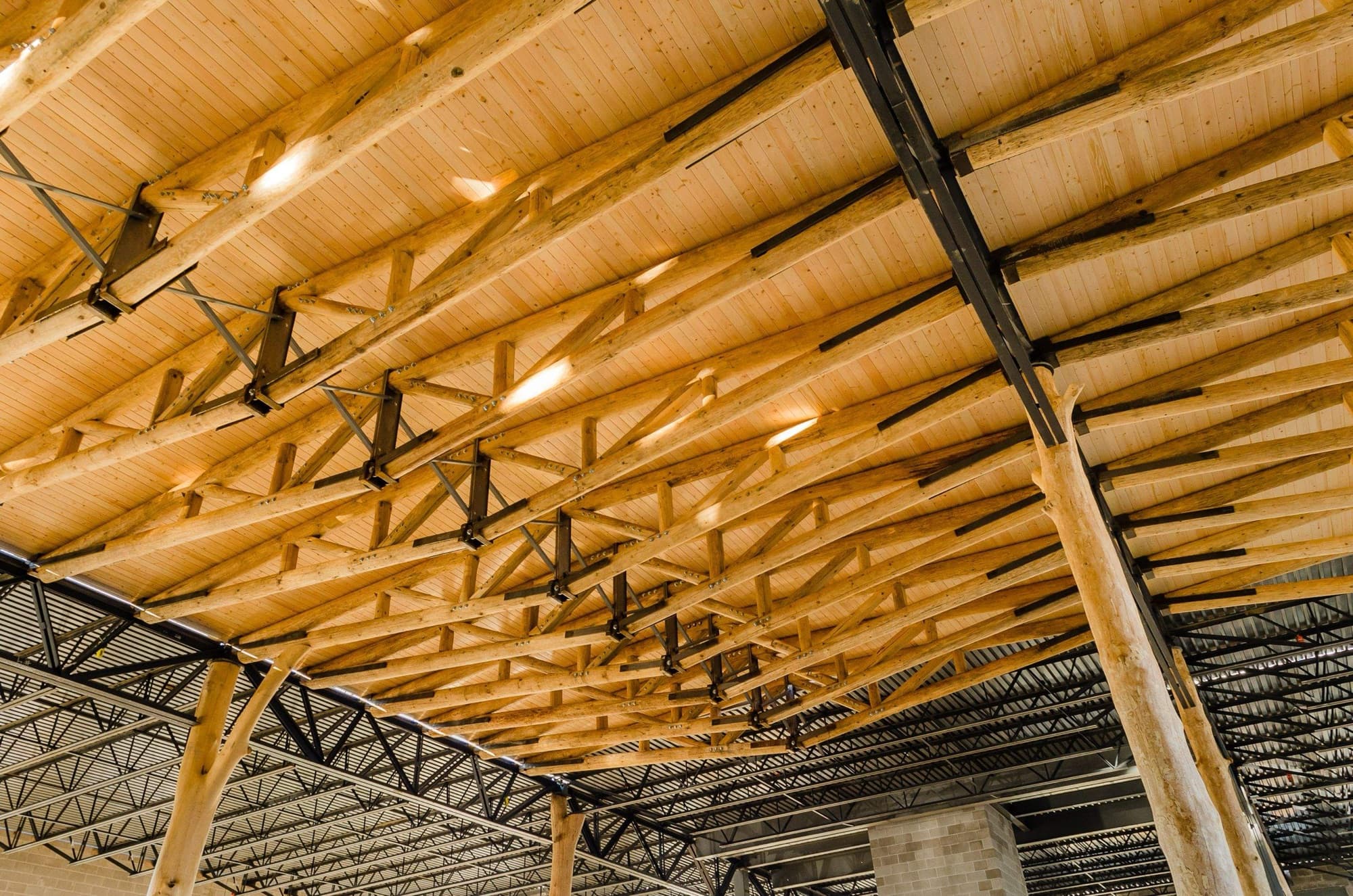
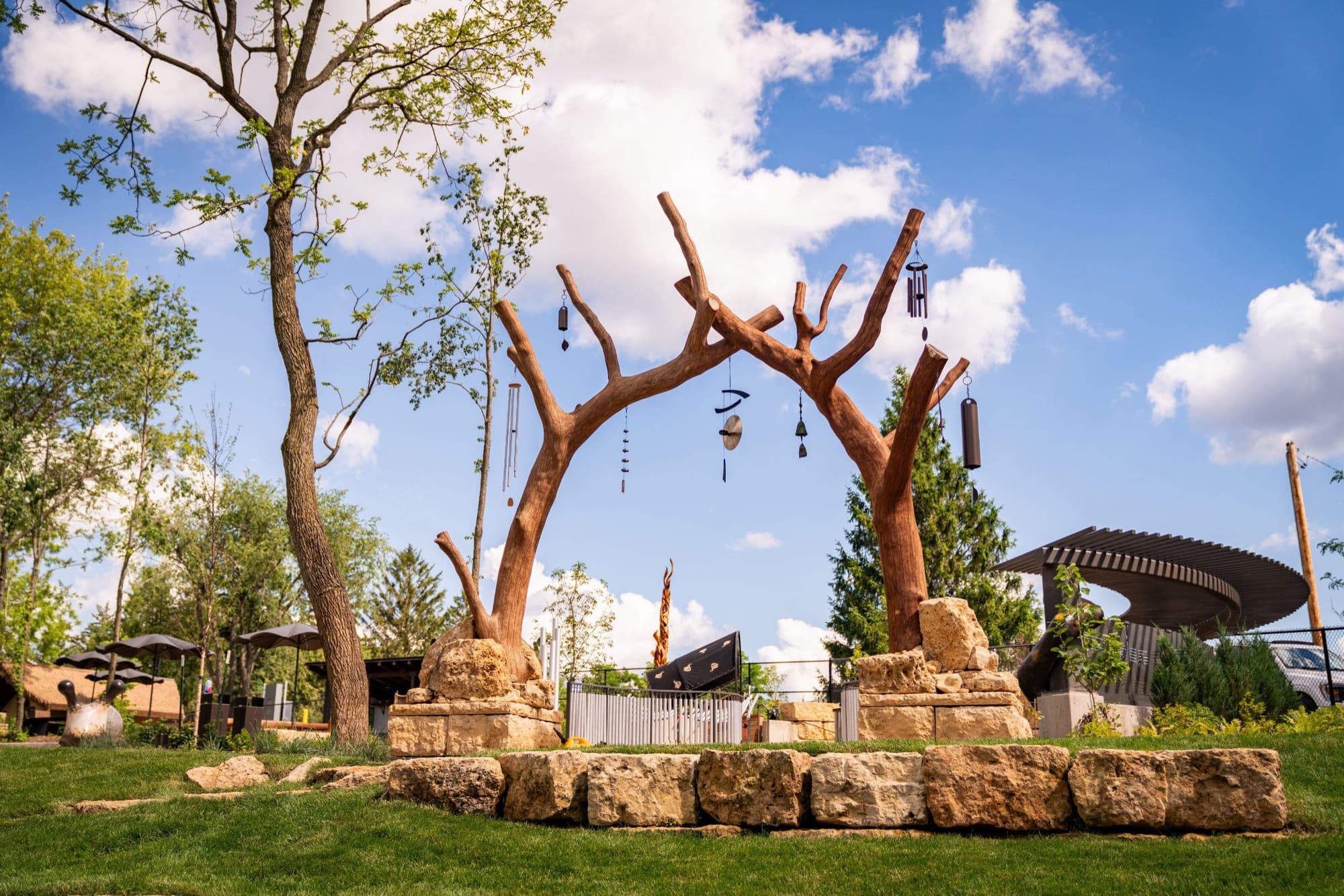
The results appear in schools, museums, zoo habitats, playgrounds, and resorts across the country. New Englanders can see them at the Gorilla Grove exhibit at Boston's Franklin Park Zoo, in the solar carports at Vermont Artisan Coffee in Waterbury, and most recently at the Portland Museum of Art's new outdoor pavilion. In 2023, the company's work on the Children's Museum of Eau Claire in Wisconsin earned an Outstanding Structure of the Year award from the National Council of Structural Engineers Associations.
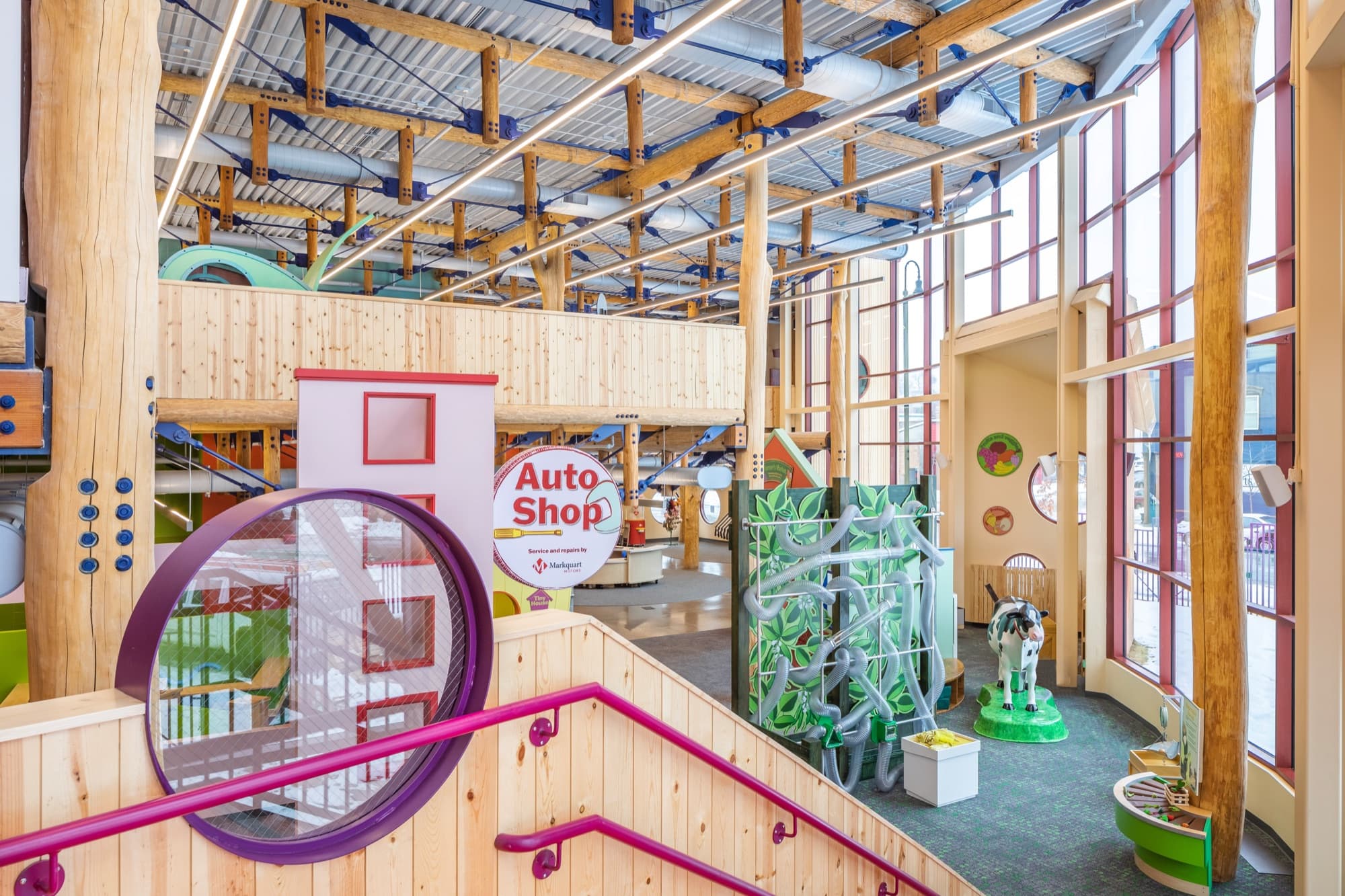
And beyond their beauty, these products boast layers of sustainability benefits. A tree can sequester 1 ton of carbon dioxide by the time it reaches 40 years old — that sequestered carbon is preserved in the WholeTrees products. The company leverages its Environmental Product Declarations — which they describe as the "nutrition labels of building materials" — for architects seeking to measure carbon emissions for projects achieving Leadership in Energy and Environmental Design (LEED) and Living Building Challenge (LBC) building standard credits. Biophilic design — bringing nature into our built environment — is further shown to have a positive impact on human experience, including lower stress and better moods.
We hear these stories from building owners again and again that our whole-timber columns become a living presence in the space. Architecture at its best is breathing with the natural surroundings. And if we're lucky the materials within the building can make our hearts sing.
Healthy Forests, Healthy Communities
The trees WholeTrees uses are often the ones the conventional market values least. Small-diameter, curved, and branching trees are regularly removed as part of responsible forest management, and they typically sell for pulp or firewood, if they sell at all.
WholeTrees pays landowners and loggers well above market rates for that timber, buying from sustainably managed forests. By adding a high-value revenue stream for these low-value trees, land managers are better able to invest in sustainability practices and maintain that productive forest rather than alternative land use options such as development. The company spends more than 80% of its production costs within 200 miles of its fabrication facilities, which keeps the economic benefit close to the forests that supply it.
That model matters in New England, where forest landowners have watched traditional markets for low-grade wood shrink as paper mills have closed.
Since the company's inception we have had one vision – to create prosperity between forests and communities. Forest thinning allows the woodland as a whole to thrive, catalyzing growth and biodiversity. By pioneering this vibrant market, we are able to build incentive to continue forest stewardship. Local economies prosper from the presence of continued regional harvesting and returning shop fabrication jobs. For land managers, this is a welcome new stream of income.
Putting Down Roots in Aroostook County
For most of its history, WholeTrees fabricated from its facility in Westby, Wisconsin. In 2025, the company established WholeTrees Maine and reopened a dormant fabrication facility in Ashland, a town of about 1,200 people in Aroostook County.
The Ashland facility sources from the surrounding Northern Forest and has already brought skilled manufacturing jobs to the community, with a commitment to living wages and benefits, and has built a network of timber vendors across the region.
Maine, and especially Northern Maine, has a vibrant history rooted in timber, and we wanted to be part of the state's efforts to reinvest in that culture and economy. Ashland was a natural fit because our facility sits on land owned by our sustainable forest partner, Seven Islands Land Company. Since our opening, the team has brought regionally sourced timber to a variety of east coast projects including the Smithsonian National Zoo's Giant Panda Habitat and Philadelphia Zoo's Andean Bear Habitat, interior trees for libraries and schools, natural playgrounds, and of course, the Portland Museum of Art's new event pavilion.
Starting up a second facility takes working capital, and construction is a business where revenue arrives project by project. That is where Flex Fund's financing fits. With revenue-based financing, a company repays its loan as a percentage of its revenue, so payments rise in strong months and ease in slower ones. It gives a growing company room to invest in people and production without giving up ownership.
"WholeTrees is an important addition to our portfolio," said Janice St. Onge, Flex Fund President. "Their work in providing a product that preserves our region's working lands, and creates living wage jobs in a rural community, is critical to building a stronger, more resilient economy. And, WholeTrees is demonstrating firsthand that innovation is alive and well in New England's forest products industry."
For Baxter, the Maine expansion is one step toward a larger goal: a construction industry that stores carbon and a forest economy that shares its prosperity with the communities that sustain it.
Success for WholeTrees will be more timbers purchased every year from more sustainably managed forests for structural use in more buildings. Each year, I want to see greater impact to rural communities, forests, and building-users. I see a world where structural round timber and its benefits are widely understood and embraced as a viable choice for all manner of buildings, replacing concrete and steel, reducing the construction industry's harm to our world, and promoting the growth of healthy forests.
For more information, visit www.wholetrees.com.
Learn more about WholeTrees Structures and the Flex Fund's investment on their portfolio page, or visit WholeTrees to explore their projects.